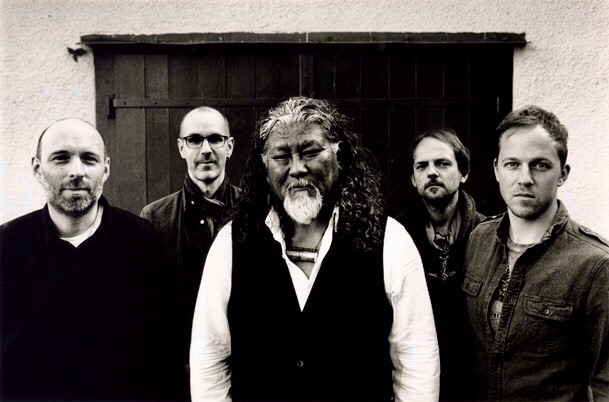
This project started spontaniously in 2014, I was invited by the Nobel Peace Prize Committee and the Tibetan community in Oslo to celebrate the 25th anniversary of His Holiness Dalai Lama’s Peace Prize. During the event, I had the opportunity to perform in the presence of His Holiness the Dalai Lama in a packed hall, an experience that deeply moved me. It was an honor to receive his blessing after the performance. It was in that moment of inspiration that I spontaneously came up with the idea to share the beautiful and powerful songs from inside Tibet with the world. I expressed to His Holiness that these songs carry strong, meaningful messages that deserve to be heard by a wider audience, and I envisioned bringing these messages to the global stage through the medium of popular Western music. His support and encouragement further fueled my passion for this endeavor, and I am grateful for the profound impact this encounter had on my artistic journey.
One day, I went on a walk in the beautiful Swiss Alps, I found myself surrounded by the tranquility of a thick pine forest. It was in this serene setting that I caught the cawing of a raven, its call echoing through the trees. This unexpected encounter immediately transported me back to my childhood, in the Daula Dar Mountains, where my father, with tears in his eyes, said: „These Ravens are from Tibet“ As if he was talking about his relatives. It is with this deep sense of nostalgia and longing that „Porok Karpo“ was born—a heartfelt homage to my father and our ancestors. The name „Porok“ holds the meaning of Raven, while „Karpo“ signifies white, together they create a powerful symbolism „the white raven“, a more pure and free form of the rebel „black sheep“. He is unapologetically different from the norm he is living in. It is a subtle statement that challenges the status quo and embraces diversity. Embracing the symbolism of the White Raven can serve as a powerful reminder to honor our authenticity and celebrate the beauty of our uniqueness, even if it means standing out from the crowd.
Behind the Two Mountains
Vocals – Loten Namling
Guitars – Patrick Lerjen
Piano – Mik Keusen
Bass – Philipp Moll
Drums – Muso Stamm
Media Coverage:
…For a long time Tibetan singer «Loten Namling» carried the wish to bring Tibetan freedom songs to the western world. Tibetans in Tibet risk their lifes to sing these songs. Many of them are in prison for simply asking for basic human rights and the return of the Dalai Lama!
So in summer 2014 he approached Swiss guitarist and Producer «Patrick Lerjen» to help him realize his vision.In a careful process Lerjen was then seeking for an organic and powerfull fusion of these melodous Tibetan songs with the earthy sounds of Western Alternativ Rock.What came into being, is a perfect allegory to the life of exiled Tibetans away from their homeland, still caring their heritage within their hearts.Namling and Lerjen were both truly surprised and amazed by the beauty of the music that rose from the melting of these two worlds.
With Mik Keusen (piano), Philipp Moll (bass) and Muso Stamm (drums) they where lucky to find the perfect companions to complete this extra ordinary TIBETAN -SWISS band Porok Karpo, thus fulfilling the vision of Loten Namling.
Porok Karpo’s music is both raw and filigree, where intimate sceneries lead to powerfull episodes. The raw rhythmic fundament by drums and bass combined with evolving piano & guitar patterns bulid the landscape in which singer Loten Namling tells the story of the the Tibetan people and their struggle to lead a self-determined life. (MikeKeusen, Porok Karkpo:Behind the two mountains, Available here, 11/7/2024)
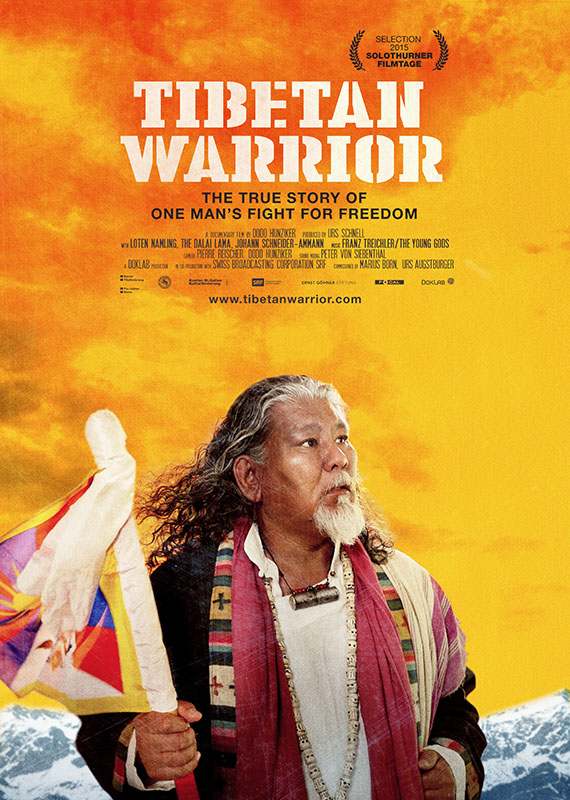
Loten Namling, star of the documentary Tibetan Warrior (Netflix), saw the mountains and plateaux of the upper Valais this week and said: “This is just like Tibet!”
The exiled singer-activist for the Himalayan country’s freedom from Chinese control noted another similarity between the Valais and his homeland: “There’s a place in Tibet that’s famous for its apricots [Ladakh’s Nubra Valley]. I’m told there are 108 varieties of apricots in the Valais, right?” Namling was talking in Leuk in a stopover on his way from a concert in Zurich to another in Geneva with his group Porok Karpo (white crow).
Porok Karpo bills itself as an “alternative Swiss-Tibetan pop-rock band”. The music’s not as strange as the label sounds. In fact, many of the numbers would be surefire audience pop singalongs in any other language but Tibetan. In Leuk Porok Karpo closed ForumWallis 2016, the annual international contemporary music festival in the historic town’s even more historic castle on a day devoted to political musicians.
Namling, born in India in 1963 to exiled Tibetan parents, became alarmed at the number of Tibetans setting themselves on fire in despair at the apparent failure of nearly 60 years of non-violent struggle against China’s takeover of the country.
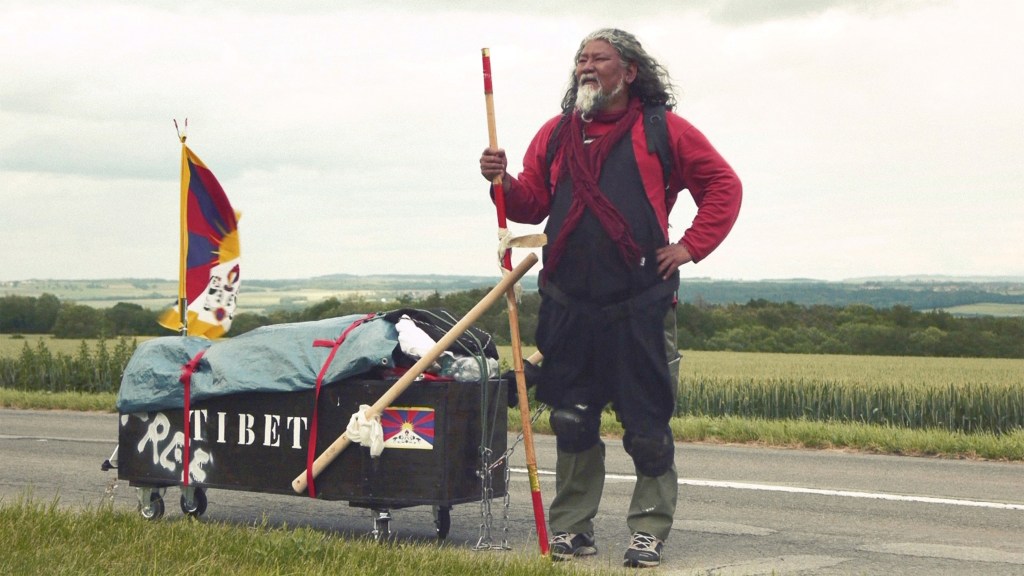
In 2012 this led him to pull a coffin on wheels and painted with the slogan “Free Tibet” from the Swiss federal capital Berne — his home since 1989 — to the United Nations in Geneva. Every 35 minutes he prostrated himself in memory of the 35 people in Tibet who committed suicide by self-immolation during the previous year.
From there he went to India, talking to politicians, experts and young radicals in the search for an answer to the self-destructive actions and met the Dalai Llama there. This became the inspiration for Tibetan Warrior by Dodo Hunziker. (Global Geneva, Peter Hulm, Tibetan Warrior turns into Pop, Available here, 11/7/2024)
To read the rest click here

 Loten Namling